Important Details
IJCRT - International Peer Reviewed, Open Access Journal, Multidisciplinary, Monthly, Nominal(Low) Fees for Professional Research Services International Journal of Creative Research Thoughts - IJCRT Peer Review Journal, Refereed Journal, Peer Reviewed Journal , Referred Journal and Indexed Journal, Open access, Online and Print Journal,international Journal Open Access, Accepted by Indian and foreign university ,IJCRT Followed Norms, guidelines, requirement, listing criteria and methodology of score/point also applied from: Scopus , Web of Science , UGC Approved , UGC CARE, UGC-CARE .
UGC Approved Journal No: 49023 (18)
UGC approval Link
https://ijcrt.org/ugc%20approval.jpg
All Policy and Approval
Please Like Our Facebook Page | CrossRef DOI and Hard copy of Certificate Provide if required. | www.IJCRT.org | editor@IJCRT.org | IJCRT WhatsApp +91 94294 58311
Publication Details:
- Paper Submission : 31-Oct-2026. Call For Paper (Volume 14 | Issue 9 | Month- September 2026)
- Acceptance/Rejection Notification: Within 02-04 Days.
- Paper Publish: Within 02-04 Days after submitting all documents.
-
Submit Your Paper Any time There No deadline.
-
Publication fees : 1570 INR for Indian author & 59$ for foreign International author.
Please Like Our Facebook Page | CrossRef DOI and Hard copy of Certificate Provide if required.
Licence and Indexing
Indexing In Google Scholar, SSRN, ResearcherID-Publons, Semantic Scholar | AI-Powered Research Tool, Microsoft Academic, Academia.edu, arXiv.org, Research Gate, CiteSeerX, ResearcherID Thomson Reuters, Mendeley : reference manager, DocStoc, ISSUU, Scribd, and many more | High Impact Factor: 7.97 | Digital object identifier (DOI) and Hard Copy of certificate Provided.




























Licence
DOI
ISSN Approved impact factor: 7.97 
Creative Common 
Valid as per new UGC Gazette regulations 

INTERNATIONAL JOURNAL OF CREATIVE RESEARCH THOUGHTS - IJCRT (IJCRT.ORG)
International Peer Reviewed & Refereed Journals, Open Access Journal
IJCRT Peer-Reviewed (Refereed) Journal as Per New UGC Rules.
ISSN Approved Journal No: 2320-2882 | Impact factor: 7.97 | ESTD Year: 2013
Call For Paper - Volume 14 | Issue 9 | Month- September 2026
Scholarly open access journals, Peer-reviewed, and Refereed Journals, Impact factor 7.97 (Calculate by google scholar and Semantic Scholar | AI-Powered Research Tool) , Multidisciplinary, Monthly, Indexing in all major database & Metadata, Citation Generator, Digital Object Identifier(CrossRef DOI)
IJCRT WhatsApp Contact
IJCRT Search Xplore - Search all paper by Paper Name , Author Name, and Title
Volume 14 | Issue 5 |
Volume 14 | Issue 5 | Month
Downlaod After Publication 1) Table of content index in PDF
2) Table of content index in HTML 2)Table of content index in HTML
3) Front Page 3) Front Page
4) Back Page 4) Back Page
5) Editor Board Member 5)Editor Board Member
6) OLD Style Issue 6)OLD Style Issue
 |
 |
|---|---|
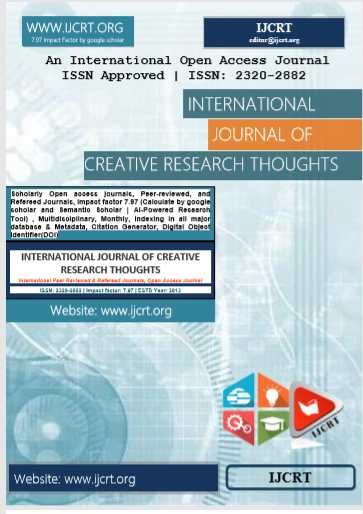
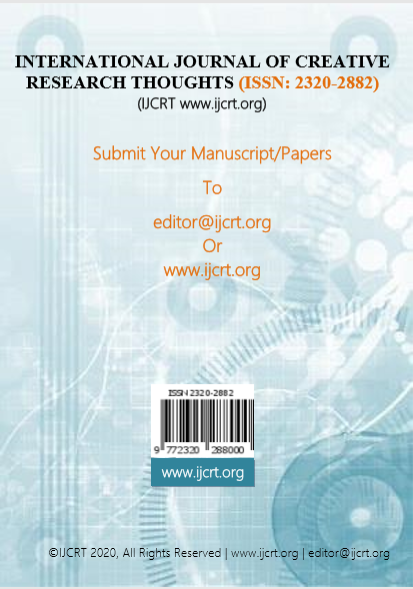
| IJCRT Journal front page | IJCRT Journal Back Page |
Paper Title: Electrochemical Properties of Ti- and Zr-Doped BSCF Cathodes for Intermediate-Temperature Solid Oxide Fuel Cells
Author Name(s): D.RAMAKRISHNA SHARMA, Dr P.VIJAYBHASKER RAO
Published Paper ID: - IJCRT2605913
Register Paper ID - 309329
Publisher Journal Name: IJPUBLICATION, IJCRT
DOI Member ID: 10.6084/m9.doi.one.IJCRT2605913 and DOI :
Author Country : Indian Author, India, 500035 , HYDERABAD, 500035 , | Research Area: Physics All Published Paper URL: http://ijcrt.org/viewfull.php?&p_id=IJCRT2605913 Published Paper PDF: download.php?file=IJCRT2605913 Published Paper PDF: http://www.ijcrt.org/papers/IJCRT2605913.pdf
Your Paper Publication Details:
Title: ELECTROCHEMICAL PROPERTIES OF TI- AND ZR-DOPED BSCF CATHODES FOR INTERMEDIATE-TEMPERATURE SOLID OXIDE FUEL CELLS
DOI (Digital Object Identifier) :
Pubished in Volume: 14 | Issue: 5 | Year: May 2026
Publisher Name : IJCRT | www.ijcrt.org | ISSN : 2320-2882
Subject Area: Physics All
Author type: Indian Author
Pubished in Volume: 14
Issue: 5
Pages: i34-i71
Year: May 2026
Downloads: 92
E-ISSN Number: 2320-2882
Abstract
Licence: creative commons attribution 4.0
License
Creative Commons Attribution 4.0 and The Open Definition

Keywords
Keywords: SOFC, BSCFTi, BSCFZr, Sol-Gel Method, XRD, SEM/EDAX, TGA/DTA, Ionic Conductivity, Density.
License
Creative Commons Attribution 4.0 and The Open Definition
Paper Title: Jus ad Bellum: Legal Grounds for the Use of Armed Force under International Law
Author Name(s): Mr. Mohd Ubais Ansari, Dr. Mirza Juned Beg
Published Paper ID: - IJCRT2605912
Register Paper ID - 309354
Publisher Journal Name: IJPUBLICATION, IJCRT
DOI Member ID: 10.6084/m9.doi.one.IJCRT2605912 and DOI :
Author Country : Indian Author, India, 283135 , Shikohabad, 283135 , | Research Area: Social Science All Published Paper URL: http://ijcrt.org/viewfull.php?&p_id=IJCRT2605912 Published Paper PDF: download.php?file=IJCRT2605912 Published Paper PDF: http://www.ijcrt.org/papers/IJCRT2605912.pdf
Your Paper Publication Details:
Title: JUS AD BELLUM: LEGAL GROUNDS FOR THE USE OF ARMED FORCE UNDER INTERNATIONAL LAW
DOI (Digital Object Identifier) :
Pubished in Volume: 14 | Issue: 5 | Year: May 2026
Publisher Name : IJCRT | www.ijcrt.org | ISSN : 2320-2882
Subject Area: Social Science All
Author type: Indian Author
Pubished in Volume: 14
Issue: 5
Pages: i22-i33
Year: May 2026
Downloads: 70
E-ISSN Number: 2320-2882
Abstract
Jus ad bellum (the right to go to war) refers to the legal criteria for the legitimate use of force by a state. It sheds light on its development from the concept of just war to the present-day concept of the United Nations Charter which forbids the use of force under Article 2(4) and authorises its use only under two narrow exceptions: self-defence (under Article 51) and Security Council authorisation (under Chapter VII). The analysis of the doctrine, from ancient civilisations to the League of Nations and Kellogg-Briand Pact, and from the 1945 order to the present, outlines the principles of necessity, proportionality and immediacy that underlie the legitimacy of self-defence. The Charter framework continues to be the benchmark for regulating interstate violence, despite ongoing controversies, such as anticipatory action, humanitarian intervention, and force against non-state actors. The paper concludes that the regime's failure to enforce its rules has created gaps, and geopolitical tensions persist to this day as a test, but it is "the law of the land" for states to explain their decision to use force in public, which has a normative effect on preventing unilateral force use and maintaining collective security as an operating principle.
Licence: creative commons attribution 4.0
License
Creative Commons Attribution 4.0 and The Open Definition
Keywords
Jus ad Bellum, Self-Defence, United Nations Charter, Use of Force, Collective Security
License
Creative Commons Attribution 4.0 and The Open Definition
Paper Title: Transformative Currents: A Blue Humanities Reading of Fluid Agency in There Are Rivers in the Sky
Author Name(s): A. Fathima, Dr. S. P. Sasi Rekha
Published Paper ID: - IJCRT2605911
Register Paper ID - 309331
Publisher Journal Name: IJPUBLICATION, IJCRT
DOI Member ID: 10.6084/m9.doi.one.IJCRT2605911 and DOI :
Author Country : Indian Author, India, 641111 , Coimbatore, 641111 , | Research Area: Medical Science All Published Paper URL: http://ijcrt.org/viewfull.php?&p_id=IJCRT2605911 Published Paper PDF: download.php?file=IJCRT2605911 Published Paper PDF: http://www.ijcrt.org/papers/IJCRT2605911.pdf
Your Paper Publication Details:
Title: TRANSFORMATIVE CURRENTS: A BLUE HUMANITIES READING OF FLUID AGENCY IN THERE ARE RIVERS IN THE SKY
DOI (Digital Object Identifier) :
Pubished in Volume: 14 | Issue: 5 | Year: May 2026
Publisher Name : IJCRT | www.ijcrt.org | ISSN : 2320-2882
Subject Area: Medical Science All
Author type: Indian Author
Pubished in Volume: 14
Issue: 5
Pages: i18-i21
Year: May 2026
Downloads: 91
E-ISSN Number: 2320-2882
Abstract
Water is an essential and inseparable part of human life. Traditionally, aquatic spaces have been viewed as pathways for travel, sources of resources, and places of recreation. However, Emerging interdisciplinary studies reframe aquatic spaces as active transformative forces that shape human identity, history, and culture. The relationship between humans and rivers is inextricable. Elif Sahfak's novel There Are Rivers in the Sky, presents water as a medium that connects past and present, memory, and history, and link characters across geographical boundaries. The novel illustrates how river bodies shape the characters' identity, emotions, memory, spirituality, and human interconnectedness. This study examines how fluid agencies are not passive elements but active active participants in influencing human and non- human existence. It focuses on how water bodies connects different civilizations, generations, cultures, and transforms human life.
Licence: creative commons attribution 4.0
License
Creative Commons Attribution 4.0 and The Open Definition
Keywords
Blue Humanities, Fluid Agency, Aquatic transformation, Riverine Studies, and Human - Nature interconnectedness.
License
Creative Commons Attribution 4.0 and The Open Definition
Paper Title: Assessing the Effectiveness of Game-Based Learning V/S Traditional Learning: A Student-Based Perception in Higher Education
Author Name(s): Harapriya Sarangi, Ambika Sankar Mishra
Published Paper ID: - IJCRT2605910
Register Paper ID - 309332
Publisher Journal Name: IJPUBLICATION, IJCRT
DOI Member ID: 10.6084/m9.doi.one.IJCRT2605910 and DOI :
Author Country : Indian Author, India, 751022 , Bhubaneswar, 751022 , | Research Area: Medical Science All Published Paper URL: http://ijcrt.org/viewfull.php?&p_id=IJCRT2605910 Published Paper PDF: download.php?file=IJCRT2605910 Published Paper PDF: http://www.ijcrt.org/papers/IJCRT2605910.pdf
Your Paper Publication Details:
Title: ASSESSING THE EFFECTIVENESS OF GAME-BASED LEARNING V/S TRADITIONAL LEARNING: A STUDENT-BASED PERCEPTION IN HIGHER EDUCATION
DOI (Digital Object Identifier) :
Pubished in Volume: 14 | Issue: 5 | Year: May 2026
Publisher Name : IJCRT | www.ijcrt.org | ISSN : 2320-2882
Subject Area: Medical Science All
Author type: Indian Author
Pubished in Volume: 14
Issue: 5
Pages: i10-i17
Year: May 2026
Downloads: 78
E-ISSN Number: 2320-2882
Abstract
Background: Game-based learning (GBL) is increasingly implemented in higher education to counteract student cognitive fatigue and low engagement associated with traditional lecture-based instructional models. However, its comprehensive pedagogical utility from the student perspective requires further investigation. Methodology: This study employed a descriptive survey design to evaluate undergraduate student perceptions regarding the effectiveness of GBL versus traditional learning. Data were collected from college student cohort using a structured questionnaire measuring factors such as engagement, learning outcomes, skill development, adaptability, and assessment. Results: The descriptive analysis revealed high positive consensus for GBL as an affective-cognitive catalyst, with a dominant cumulative majority confirming its success in heightening active classroom engagement and clarifying complex concepts. Conversely, positive consensus decreased when evaluating GBL's capacity to develop professional skills, leaving a large block of students completely neutral. High volatility was observed regarding system adaptability and accessibility, alongside widespread student skepticism toward gamified grading structures. Findings: The findings indicate a critical gap between GBL's motivational capabilities and its perceived long-term professional or evaluative utility. While students value digital interactivity and conceptual visualization, they remain highly protective of the structural transparency, objective accountability, and academic rigor provided by conventional exam frameworks. Conclusion: This research concludes that higher education institutions should avoid entirely replacing traditional lecture models with casual gamification. Instead, the study recommends a hybrid pedagogical framework that strategically leverages GBL for initial motivation and application, while maintaining traditional instruction and assessment to guarantee rigorous academic validation and professional workforce preparation.
Licence: creative commons attribution 4.0
License
Creative Commons Attribution 4.0 and The Open Definition
Keywords
Game-based learning, learning outcomes, adaptability, traditional learning, assessment
License
Creative Commons Attribution 4.0 and The Open Definition
Paper Title: Role of Surya Namaskar With and Without Mantra in Stress Modulation: An Ayurvedic and Modern Physiological Conceptual Review
Author Name(s): Dr. Chaudhary Mohammad Rayees Mohammad Halim, Dr. Hemangini Waghulade
Published Paper ID: - IJCRT2605909
Register Paper ID - 309300
Publisher Journal Name: IJPUBLICATION, IJCRT
DOI Member ID: 10.6084/m9.doi.one.IJCRT2605909 and DOI :
Author Country : Indian Author, India, 400072 , MUMBAI, 400072 , | Research Area: Health Science All Published Paper URL: http://ijcrt.org/viewfull.php?&p_id=IJCRT2605909 Published Paper PDF: download.php?file=IJCRT2605909 Published Paper PDF: http://www.ijcrt.org/papers/IJCRT2605909.pdf
Your Paper Publication Details:
Title: ROLE OF SURYA NAMASKAR WITH AND WITHOUT MANTRA IN STRESS MODULATION: AN AYURVEDIC AND MODERN PHYSIOLOGICAL CONCEPTUAL REVIEW
DOI (Digital Object Identifier) :
Pubished in Volume: 14 | Issue: 5 | Year: May 2026
Publisher Name : IJCRT | www.ijcrt.org | ISSN : 2320-2882
Subject Area: Health Science All
Author type: Indian Author
Pubished in Volume: 14
Issue: 5
Pages: i1-i9
Year: May 2026
Downloads: 84
E-ISSN Number: 2320-2882
Abstract
Stress is one of the major psycho-physiological health concerns affecting college students due to academic burden, emotional instability, competitive lifestyle, disturbed sleep, and psychosocial imbalance. Persistent stress negatively influences concentration, memory, emotional stability, immunity, sleep quality, academic performance, and overall quality of life. Modern physiology explains stress through activation of the hypothalamic-pituitary-adrenal (HPA) axis and sympathetic nervous system, resulting in increased secretion of cortisol and catecholamines. Ayurveda explains stress-related manifestations through concepts such as Chinta, Vishada, Bhaya, Atatvabhinivesha, and imbalance of Raja and Tama Dosha affecting Manas and Manovaha Srotas. Surya Namaskar is a classical yogic practice consisting of twelve sequential postures coordinated with controlled breathing. It positively influences physical fitness, autonomic balance, neuroendocrine regulation, respiratory efficiency, concentration, and emotional stability. Traditional Surya Namaskar practiced with mantra chanting may further enhance mindfulness, psycho-spiritual harmony, parasympathetic dominance, and mental relaxation. The present conceptual review aims to evaluate the role of Surya Namaskar with and without mantra in stress modulation through Ayurvedic and modern physiological perspectives with special reference to Sharir Prakruti and Kriya Sharir principles. Literature for this review was collected from classical Ayurvedic texts, yoga literature, modern physiology textbooks, and peer-reviewed research articles indexed in scientific databases. The review highlights the effects of Surya Namaskar on autonomic balance, neuroendocrine regulation, Raja-Tama imbalance, Ojas, Manovaha Srotas, and psycho-physiological functioning. The review suggests that Surya Namaskar may serve as a safe, economical, and non-pharmacological approach for stress management. Addition of mantra chanting may further improve emotional regulation, concentration, and stress adaptability. Further clinical and observational studies are required for scientific validation.
Licence: creative commons attribution 4.0
License
Creative Commons Attribution 4.0 and The Open Definition
Keywords
Stress, Surya Namaskar, Mantra, Stress Modulation, Kriya Sharir, Sharir Prakruti, Yoga, Ayurveda.
License
Creative Commons Attribution 4.0 and The Open Definition
Paper Title: Isolation And Screening Of Laccase Producing Fungi From Textile Sizing Site
Author Name(s): Dr. Vaishali Nirmalkar, Asfiya Shaikh
Published Paper ID: - IJCRT2605908
Register Paper ID - 309294
Publisher Journal Name: IJPUBLICATION, IJCRT
DOI Member ID: 10.6084/m9.doi.one.IJCRT2605908 and DOI :
Author Country : Indian Author, India, 421302 , Bhiwandi, 421302 , | Research Area: Biological Science Published Paper URL: http://ijcrt.org/viewfull.php?&p_id=IJCRT2605908 Published Paper PDF: download.php?file=IJCRT2605908 Published Paper PDF: http://www.ijcrt.org/papers/IJCRT2605908.pdf
Your Paper Publication Details:
Title: ISOLATION AND SCREENING OF LACCASE PRODUCING FUNGI FROM TEXTILE SIZING SITE
DOI (Digital Object Identifier) :
Pubished in Volume: 14 | Issue: 5 | Year: May 2026
Publisher Name : IJCRT | www.ijcrt.org | ISSN : 2320-2882
Subject Area: Biological Science
Author type: Indian Author
Pubished in Volume: 14
Issue: 5
Pages: h988-h995
Year: May 2026
Downloads: 94
E-ISSN Number: 2320-2882
Abstract
Laccases are multicopper oxidases known for their ability to degrade phenolic and non-phenolic lignin-related compounds, making them essential for various biotechnological and environmental applications. This study aimed to isolate and screen efficient laccase-producing fungi from soil samples collected at textile sizing sites in Bhiwandi, Maharashtra. Using serial dilution and SDA media, 120 fungal isolates were obtained, of which 90 were screened for laccase activity via guaiacol-based plate assay. Positive laccase producers were identified through the formation of reddish-brown halos, indicating enzymatic oxidation. Thirty-seven isolates exhibited strong laccase activity and were subjected to microscopic analysis, revealing dominance of the genera Aspergillus, Penicillium, Trichoderma, Fusarium, and Rhizopus. The study highlights the ecological adaptability and enzymatic potential of indigenous fungi in polluted environments. Given laccase's eco-friendly catalytic properties and broad substrate specificity, these isolates hold promise for industrial applications such as dye decolorization, lignin degradation, and detoxification of textile effluents. This research underscores the significance of exploring local microbial biodiversity as a cost-effective and sustainable approach to address environmental challenges, paving the way for future pilot-scale enzyme production and strategic implementation of fungal laccases in bioremediation efforts.
Licence: creative commons attribution 4.0
License
Creative Commons Attribution 4.0 and The Open Definition
Keywords
Guaiacol assay, Aspergillus, Trichoderma, Bioremediation, Textile sizing site.
License
Creative Commons Attribution 4.0 and The Open Definition
Paper Title: Learning Achievement of Undergraduate students in relation to their Grit and Emotional Intelligence
Author Name(s): Dr. Ankita Roy, Dr. Dadhi Baman Tali
Published Paper ID: - IJCRT2605907
Register Paper ID - 309267
Publisher Journal Name: IJPUBLICATION, IJCRT
DOI Member ID: 10.6084/m9.doi.one.IJCRT2605907 and DOI : https://doi.org/10.56975/ijcrt.v14i5.309267
Author Country : Indian Author, India, 754202 , Salipur Cuttack Odisha, 754202 , | Research Area: Social Science All Published Paper URL: http://ijcrt.org/viewfull.php?&p_id=IJCRT2605907 Published Paper PDF: download.php?file=IJCRT2605907 Published Paper PDF: http://www.ijcrt.org/papers/IJCRT2605907.pdf
Your Paper Publication Details:
Title: LEARNING ACHIEVEMENT OF UNDERGRADUATE STUDENTS IN RELATION TO THEIR GRIT AND EMOTIONAL INTELLIGENCE
DOI (Digital Object Identifier) : https://doi.org/10.56975/ijcrt.v14i5.309267
Pubished in Volume: 14 | Issue: 5 | Year: May 2026
Publisher Name : IJCRT | www.ijcrt.org | ISSN : 2320-2882
Subject Area: Social Science All
Author type: Indian Author
Pubished in Volume: 14
Issue: 5
Pages: h976-h987
Year: May 2026
Downloads: 109
E-ISSN Number: 2320-2882
Abstract
Abstract: Traditionally, Intelligence Quotient (IQ) has been regarded as the sole predictor of learning achievement, i.e. better the IQ, the better will be the academic performance. However, researches over the years have revealed that IQ is not the only significant predictor of academic success or learning achievement. Hence, there are other non-cognitive measures of learning achievement. Two such non-cognitive factors that this study assumes to affect learning achievement are Grit and Emotional Intelligence. Hence, the investigator has undertaken the present study which is titled as "Learning Achievement of Undergraduate students in relation to their Grit and Emotional Intelligence" in an attempt to find out the relationship among Grit and Emotional Intelligence to the Learning achievement of undergraduate students in liberal and professional courses and to find out the contribution of Grit and Emotional Intelligence to the learning achievement of the students of undergraduate level in liberal and professional courses. Thus, the Causal-Comparative Method was adopted for the present study. For the collection of data, Adapted Grit Scale and the Emotional Intelligence Scale developed by Anukool Hyde, Sanjyot Pethe and Upinder Dhar in 2002 were administered on 60 students of undergraduate liberal course and 60 students of undergraduate professional courses of Ravenshaw University, Cuttack, Odisha. The collected data were analysed using the Product moment coefficient of correlation (r) and Regression Equation. The results of the study revealed that grit and Emotional Intelligence are positively related to the learning achievement of the undergraduate liberal course students. Similarly, Grit is positively related to the learning achievement of Undergraduate students of professional courses whereas emotional intelligence is negatively related to learning achievement of undergraduate professional course students. Further grit and emotional intelligence were found to be the predictors of learning achievement of undergraduate liberal course students. In the case of undergraduate professional course students, grit was not found to be a predictor of learning achievement but emotional intelligence was found to be predictor of learning achievement.
Licence: creative commons attribution 4.0
License
Creative Commons Attribution 4.0 and The Open Definition
Keywords
Key words: Learning Achievement, Grit and Emotional Intelligence, Undergraduate Students.
License
Creative Commons Attribution 4.0 and The Open Definition
Paper Title: Factors Influencing Online Shopping Behaviors in Tamil Nadu: A Secondary Data Analysis
Author Name(s): Gopalakrishnan.K, Dr.G.Venkatesan, Dr.R.Ramesh, Dr.A.Mahadevan
Published Paper ID: - IJCRT2605906
Register Paper ID - 309092
Publisher Journal Name: IJPUBLICATION, IJCRT
DOI Member ID: 10.6084/m9.doi.one.IJCRT2605906 and DOI :
Author Country : Indian Author, India, 637504 , Salem, 637504 , | Research Area: Commerce and Management, MBA All Branch Published Paper URL: http://ijcrt.org/viewfull.php?&p_id=IJCRT2605906 Published Paper PDF: download.php?file=IJCRT2605906 Published Paper PDF: http://www.ijcrt.org/papers/IJCRT2605906.pdf
Your Paper Publication Details:
Title: FACTORS INFLUENCING ONLINE SHOPPING BEHAVIORS IN TAMIL NADU: A SECONDARY DATA ANALYSIS
DOI (Digital Object Identifier) :
Pubished in Volume: 14 | Issue: 5 | Year: May 2026
Publisher Name : IJCRT | www.ijcrt.org | ISSN : 2320-2882
Subject Area: Commerce and Management, MBA All Branch
Author type: Indian Author
Pubished in Volume: 14
Issue: 5
Pages: h970-h975
Year: May 2026
Downloads: 81
E-ISSN Number: 2320-2882
Abstract
Abstract The rapid advancement of digital technology and internet accessibility has significantly transformed consumer purchasing patterns across India, particularly in Tamil Nadu. The increasing penetration of smartphones, affordable internet services, and the expansion of digital payment systems have encouraged consumers to shift from traditional shopping methods to online platforms. E-commerce companies are continuously enhancing their services through personalized marketing strategies, attractive discounts, faster delivery mechanisms, and improved customer support to attract and retain consumers. In Tamil Nadu, changing lifestyles, urbanization, and growing awareness of digital platforms have further accelerated the adoption of online shopping among different age groups. Consumers now prefer online shopping due to convenience, time-saving benefits, wider product availability, and the ability to compare prices and reviews before making purchase decisions. This research article examines the key factors influencing online shopping behavior in Tamil Nadu, India, a state with a rapidly growing e-commerce market. Drawing on secondary data from empirical studies, industry reports, and social media insights, the study identifies marketing strategies, delivery systems, product diversity, browsing speed, and customer service as primary drivers. With an estimated 16.6 million online shoppers in 2025, Tamil Nadu's high internet penetration (60%) and literacy rate (80.1%) foster a conducive environment for e-commerce. The findings highlight the need for secure, user-friendly platforms and robust delivery systems to sustain growth, while addressing challenges like rural connectivity and consumer trust. Additionally, the study emphasizes that consumer satisfaction and trust are essential for the long-term success of e-commerce businesses in the region. The research provides valuable insights for marketers, policymakers, and online retailers to develop effective strategies that enhance customer experience and strengthen the digital shopping ecosystem in Tamil Nadu.
Licence: creative commons attribution 4.0
License
Creative Commons Attribution 4.0 and The Open Definition
Keywords
Key Words: Online Shopping, Influencing Factors, Buyer Behaviour, E-Commerce, Delivery System, Consumer Trust, Digital Marketing, Customer Satisfaction.
License
Creative Commons Attribution 4.0 and The Open Definition
Paper Title: EDUCATIONAL INEQUALITIES AND LITERACY LEVELS IN RAICHUR DISTRICT, KARNATAKA: A CENSUS-BASED STUDY
Author Name(s): Veeranna, Dr. M. G. Nayak
Published Paper ID: - IJCRT2605905
Register Paper ID - 308631
Publisher Journal Name: IJPUBLICATION, IJCRT
DOI Member ID: 10.6084/m9.doi.one.IJCRT2605905 and DOI :
Author Country : Indian Author, India, 580007 , Dharwad, 580007 , | Research Area: Medical Science All Published Paper URL: http://ijcrt.org/viewfull.php?&p_id=IJCRT2605905 Published Paper PDF: download.php?file=IJCRT2605905 Published Paper PDF: http://www.ijcrt.org/papers/IJCRT2605905.pdf
Your Paper Publication Details:
Title: EDUCATIONAL INEQUALITIES AND LITERACY LEVELS IN RAICHUR DISTRICT, KARNATAKA: A CENSUS-BASED STUDY
DOI (Digital Object Identifier) :
Pubished in Volume: 14 | Issue: 5 | Year: May 2026
Publisher Name : IJCRT | www.ijcrt.org | ISSN : 2320-2882
Subject Area: Medical Science All
Author type: Indian Author
Pubished in Volume: 14
Issue: 5
Pages: h959-h969
Year: May 2026
Downloads: 101
E-ISSN Number: 2320-2882
Abstract
Abstract: This study examines the literacy pattern and spatial variation in Raichur District using Census data from 2001 and 2011. Literacy is an important indicator of socio-economic development and human resource progress. The study aims to analyze taluk-wise literacy rates and identify changes during the decade. It is based on secondary data collected from Census Handbooks, District Gazetteers, government reports, journals, books, and Survey of India maps. Quantitative and cartographic methods were used for analysis. The findings show that the overall literacy rate increased from 48.81 per cent in 2001 to 59.56 per cent in 2011, with an improvement of 10.75 percentage. Raichur taluk recorded the highest literacy, while Devadurga remained the least literate taluk. Rural literacy rose from 42.00 per cent to 53.68 percent, and urban literacy from 66.24 per cent to 74.56 percent. Although male literacy remained higher, female literacy showed greater improvement. The study highlights persistent regional and gender disparities in literacy development.
Licence: creative commons attribution 4.0
License
Creative Commons Attribution 4.0 and The Open Definition
Keywords
Keywords: Gender disparity, Literacy Rate, Educational Attainment, educational growth, regional disparities.
License
Creative Commons Attribution 4.0 and The Open Definition
Paper Title: Socio-Cultural Dynamics of Andhra Under the Kalyana Chalukyas (c. 973-1189 CE)
Author Name(s): Dr. Nalliboyina Saibabu
Published Paper ID: - IJCRT2605904
Register Paper ID - 309282
Publisher Journal Name: IJPUBLICATION, IJCRT
DOI Member ID: 10.6084/m9.doi.one.IJCRT2605904 and DOI :
Author Country : Indian Author, India, 522510 , Guntur, 522510 , | Research Area: Arts All Published Paper URL: http://ijcrt.org/viewfull.php?&p_id=IJCRT2605904 Published Paper PDF: download.php?file=IJCRT2605904 Published Paper PDF: http://www.ijcrt.org/papers/IJCRT2605904.pdf
Your Paper Publication Details:
Title: SOCIO-CULTURAL DYNAMICS OF ANDHRA UNDER THE KALYANA CHALUKYAS (C. 973-1189 CE)
DOI (Digital Object Identifier) :
Pubished in Volume: 14 | Issue: 5 | Year: May 2026
Publisher Name : IJCRT | www.ijcrt.org | ISSN : 2320-2882
Subject Area: Arts All
Author type: Indian Author
Pubished in Volume: 14
Issue: 5
Pages: h949-h958
Year: May 2026
Downloads: 101
E-ISSN Number: 2320-2882
Abstract
The Kalyana Chalukyas, who governed extensive territories of the Deccan plateau from 973 to 1189 CE, profoundly shaped the socio-cultural landscape of Andhradesa (the Telugu-speaking region of present-day Andhra Pradesh and Telangana). This article examines the social stratification, gender dynamics, religious configurations, temple patronage patterns, and economic structures that characterised their rule in the Andhra region. Drawing primarily upon epigraphical evidence--including stone inscriptions, copper plate charters, and literary sources such as the Manasollasa, Vikramankadevacharitam, and Gadayuddha--the study illuminates a period marked by religious pluralism, complex social hierarchies, commercial prosperity, and intensive temple construction. The article further traces the gradual recession of Jainism, the ascendancy of Saiva sectarian traditions--particularly the Kalamukha and later Virasaiva movements--and the evolving public role of women in administration and religious patronage.
Licence: creative commons attribution 4.0
License
Creative Commons Attribution 4.0 and The Open Definition
Keywords
Kalyana Chalukyas, Andhradesa, Medieval Deccan, Saivism, Jainism, Social Stratification, Merchant Guilds, Temple Patronage, Women's History
License
Creative Commons Attribution 4.0 and The Open Definition
Call For Paper September 2026
Call For Papers
September 2026
Volume 14 | Issue 9
Last Date :
31-Oct-2026
Submit Manuscript Online Impact Factor: 7.97 Review Results : Within 02-03 Days Paper Publication : Within 02-03 Days
September 2026
Volume 14 | Issue 9
Last Date :
31-Oct-2026
Submit Manuscript Online Impact Factor: 7.97 Review Results : Within 02-03 Days Paper Publication : Within 02-03 Days
Published Issue Details
For Authors
Forms / Downloads
Other IMP Links
Indexing Partner
Research Area
LICENSE





ISSN and 7.97 Impact Factor Details
ISSN: 2320-2882 Impact Factor: 7.97 and ISSN APPROVED Journal Starting Year (ESTD) : 2013


ISSN and 7.97 Impact Factor Details
ISSN: 2320-2882 Impact Factor: 7.97 and ISSN APPROVED Journal Starting Year (ESTD) : 2013
DOI Details
CONFERENCE
CONFERENCE MANAGMENT & PUBLICATION CONFERENCE PROPOSAL
RECENT CONFERENCE

CONFERENCE PROPOSAL CONFERENCE PROCEEDINGS
CONFERENCE PROPOSAL CONFERENCE PROCEEDINGS
For Reviewer /Referral (RMS) Earn 500 per paper
Important Links
NEWS & Conference
Digital Library
IJCRT RMS | Earn 500 Per Paper.

Open Access


LICENSE
Indexing Partner
Scholarly open access journals, Peer-reviewed, and Refereed Journals, Impact factor 7.97 (Calculate by google scholar and Semantic Scholar | AI-Powered Research Tool) , Multidisciplinary, Monthly, Indexing in all major database & Metadata, Citation Generator, Digital Object Identifier(DOI)