Important Details
IJCRT - International Peer Reviewed, Open Access Journal, Multidisciplinary, Monthly, Nominal(Low) Fees for Professional Research Services International Journal of Creative Research Thoughts - IJCRT Peer Review Journal, Refereed Journal, Peer Reviewed Journal , Referred Journal and Indexed Journal, Open access, Online and Print Journal,international Journal Open Access, Accepted by Indian and foreign university ,IJCRT Followed Norms, guidelines, requirement, listing criteria and methodology of score/point also applied from: Scopus , Web of Science , UGC Approved , UGC CARE, UGC-CARE .
UGC Approved Journal No: 49023 (18)
UGC approval Link
https://ijcrt.org/ugc%20approval.jpg
All Policy and Approval
Please Like Our Facebook Page | CrossRef DOI and Hard copy of Certificate Provide if required. | www.IJCRT.org | editor@IJCRT.org | IJCRT WhatsApp +91 94294 58311
Publication Details:
- Paper Submission : 31-Oct-2026. Call For Paper (Volume 14 | Issue 9 | Month- September 2026)
- Acceptance/Rejection Notification: Within 02-04 Days.
- Paper Publish: Within 02-04 Days after submitting all documents.
-
Submit Your Paper Any time There No deadline.
-
Publication fees : 1570 INR for Indian author & 59$ for foreign International author.
Please Like Our Facebook Page | CrossRef DOI and Hard copy of Certificate Provide if required.
Licence and Indexing
Indexing In Google Scholar, SSRN, ResearcherID-Publons, Semantic Scholar | AI-Powered Research Tool, Microsoft Academic, Academia.edu, arXiv.org, Research Gate, CiteSeerX, ResearcherID Thomson Reuters, Mendeley : reference manager, DocStoc, ISSUU, Scribd, and many more | High Impact Factor: 7.97 | Digital object identifier (DOI) and Hard Copy of certificate Provided.




























Licence
DOI
ISSN Approved impact factor: 7.97 
Creative Common 
Valid as per new UGC Gazette regulations 

INTERNATIONAL JOURNAL OF CREATIVE RESEARCH THOUGHTS - IJCRT (IJCRT.ORG)
International Peer Reviewed & Refereed Journals, Open Access Journal
IJCRT Peer-Reviewed (Refereed) Journal as Per New UGC Rules.
ISSN Approved Journal No: 2320-2882 | Impact factor: 7.97 | ESTD Year: 2013
Call For Paper - Volume 14 | Issue 9 | Month- September 2026
Scholarly open access journals, Peer-reviewed, and Refereed Journals, Impact factor 7.97 (Calculate by google scholar and Semantic Scholar | AI-Powered Research Tool) , Multidisciplinary, Monthly, Indexing in all major database & Metadata, Citation Generator, Digital Object Identifier(CrossRef DOI)
IJCRT WhatsApp Contact
IJCRT Search Xplore - Search all paper by Paper Name , Author Name, and Title
Volume 13 | Issue 12 |
Volume 13 | Issue 12 | Month
Downlaod After Publication 1) Table of content index in PDF
2) Table of content index in HTML 2)Table of content index in HTML
3) Front Page 3) Front Page
4) Back Page 4) Back Page
5) Editor Board Member 5)Editor Board Member
6) OLD Style Issue 6)OLD Style Issue
 |
 |
|---|---|
| IJCRT Journal front page | IJCRT Journal Back Page |
Paper Title: X-Ray Based Bone Fracture Detection With 2D-3D Reconstruction And Holographic Visualization
Author Name(s): Mrs. Sonali Mishra, Anjan Kumar S.R, Pavana Kumar G.V, R Yogesh Yadav, Pritam Rathod
Published Paper ID: - IJCRT2512272
Register Paper ID - 298439
Publisher Journal Name: IJPUBLICATION, IJCRT
DOI Member ID: 10.6084/m9.doi.one.IJCRT2512272 and DOI :
Author Country : Indian Author, India, 560083 , Banglore, 560083 , | Research Area: Humanities All Published Paper URL: http://ijcrt.org/viewfull.php?&p_id=IJCRT2512272 Published Paper PDF: download.php?file=IJCRT2512272 Published Paper PDF: http://www.ijcrt.org/papers/IJCRT2512272.pdf
Your Paper Publication Details:
Title: X-RAY BASED BONE FRACTURE DETECTION WITH 2D-3D RECONSTRUCTION AND HOLOGRAPHIC VISUALIZATION
DOI (Digital Object Identifier) :
Pubished in Volume: 13 | Issue: 12 | Year: December 2025
Publisher Name : IJCRT | www.ijcrt.org | ISSN : 2320-2882
Subject Area: Humanities All
Author type: Indian Author
Pubished in Volume: 13
Issue: 12
Pages: c302-c308
Year: December 2025
Downloads: 161
E-ISSN Number: 2320-2882
Abstract
This paper presents an advanced approach for automated bone fracture detection using X-ray images combined with 2D-3D reconstruction and holographic visualization. The system enhances diagnostic accuracy by applying deep learning-based image processing to identify fracture regions with high precision. The extracted features are used to generate 3D anatomical structures that help clinicians understand fracture depth and alignment. These reconstructed models are projected as interactive holograms, enabling immersive medical visualization. The proposed method reduces diagnostic time, improves surgical planning, and supports remote healthcare applications. Experimental results demonstrate improved clarity, accuracy, and usability compared to traditional X-ray analysis.
Licence: creative commons attribution 4.0
License
Creative Commons Attribution 4.0 and The Open Definition

Keywords
X-ray imaging, bone fracture detection, deep learning, image processing, 2D-3D reconstruction, holographic visualization, medical diagnostics, computer vision, healthcare technology, 3D modeling.
License
Creative Commons Attribution 4.0 and The Open Definition
Paper Title: Aspect-Based Hybrid CNN With BERT Embeddings For Fine-Grained And Explainable Emotion Recognition
Author Name(s): Prashanth Kumar M, Dr Mohit Gangwar
Published Paper ID: - IJCRT2512271
Register Paper ID - 298469
Publisher Journal Name: IJPUBLICATION, IJCRT
DOI Member ID: 10.6084/m9.doi.one.IJCRT2512271 and DOI :
Author Country : Indian Author, India, 466001 , MADHYA PRADESH, 466001 , | Research Area: Science and Technology Published Paper URL: http://ijcrt.org/viewfull.php?&p_id=IJCRT2512271 Published Paper PDF: download.php?file=IJCRT2512271 Published Paper PDF: http://www.ijcrt.org/papers/IJCRT2512271.pdf
Your Paper Publication Details:
Title: ASPECT-BASED HYBRID CNN WITH BERT EMBEDDINGS FOR FINE-GRAINED AND EXPLAINABLE EMOTION RECOGNITION
DOI (Digital Object Identifier) :
Pubished in Volume: 13 | Issue: 12 | Year: December 2025
Publisher Name : IJCRT | www.ijcrt.org | ISSN : 2320-2882
Subject Area: Science and Technology
Author type: Indian Author
Pubished in Volume: 13
Issue: 12
Pages: c289-c301
Year: December 2025
Downloads: 202
E-ISSN Number: 2320-2882
Abstract
The rapid growth of IoT devices in smart city environments generated massive streams of real-time data, creating strong demand for efficient and secure anomaly detection mechanisms. In that vein, centrally administered AI methods are plagued by bandwidth limitations, latency, and privacy concerns, especially for large-scale deployments. This motivated the shift toward decentralized edge intelligence and federated learning for on-device analytics.Problem/Gap: Most of the anomaly detection frameworks used so far relied on cloud-centric architectures that could not cope with the demanding requirements imposed for real-time responses and did not give sufficient security to sensitive IoT data. Aim/Objective: The paper focuses on the design and evaluation of a federated learning-based edge intelligence framework that is able to conduct IoT anomaly detection tasks over smart city networks in real time. Methodology/Approach: The proposed framework combines Federated Averaging with adaptive edge-side aggregation to enable training of a distributed model without the sharing of raw sensor data. Experiments were conducted on the Edge-IIoTset dataset in an emulated edge computing environment using TensorFlow Federated with MQTT-based communication. Performance was compared against centralized machine learning and cloud-only approaches in different network and workload scenarios. The framework also used various communication optimization techniques to reduce synchronization overhead.Results / Findings: It improved the performance in anomaly detection by up to about 15% compared to the baseline, while comparatively reducing latency and communication costs since it allows for real-time, stable detection across the edge nodes. The system still maintained effective model convergence even with fluctuating network conditions. Implications / Significance: These results demonstrated that the proposed federated edge-based framework can bring scalability with the preservation of privacy and assurance of real-time analytics for IoT infrastructure in smart cities. Such a system will have a great impact on urban safety, predictive maintenance, and resilience of critical city services. Furthermore, this work also provided a practical basis for future deployments of autonomous distributed AI in smart environments.
Licence: creative commons attribution 4.0
License
Creative Commons Attribution 4.0 and The Open Definition
Keywords
Federated Learning; Edge Intelligence; IoT; Smart Cities; Anomaly Detection; Real-Time Systems; Privacy Preservation; Distributed Machine Learning
License
Creative Commons Attribution 4.0 and The Open Definition
Paper Title: Herbal Hair Oil
Author Name(s): Vikash Vishwakarma, Sandeep Yadav, Santosh Gupta, Arjun Yadav, Aman Gupta
Published Paper ID: - IJCRT2512270
Register Paper ID - 298543
Publisher Journal Name: IJPUBLICATION, IJCRT
DOI Member ID: 10.6084/m9.doi.one.IJCRT2512270 and DOI :
Author Country : Indian Author, India, 222142 , jaunpur, 222142 , | Research Area: Health Science All Published Paper URL: http://ijcrt.org/viewfull.php?&p_id=IJCRT2512270 Published Paper PDF: download.php?file=IJCRT2512270 Published Paper PDF: http://www.ijcrt.org/papers/IJCRT2512270.pdf
Your Paper Publication Details:
Title: HERBAL HAIR OIL
DOI (Digital Object Identifier) :
Pubished in Volume: 13 | Issue: 12 | Year: December 2025
Publisher Name : IJCRT | www.ijcrt.org | ISSN : 2320-2882
Subject Area: Health Science All
Author type: Indian Author
Pubished in Volume: 13
Issue: 12
Pages: c276-c288
Year: December 2025
Downloads: 188
E-ISSN Number: 2320-2882
Abstract
The increasing incidence of hair loss and related scalp disorders has led to a surge in demand for natural hair care products. This study focused on the formulation and evaluation of a Polyherbal Hair Oil incorporating extracts from traditionally effective herbs like Bhringraj, Amla, Hibiscus, and Kalonji (Black Seed). The primary objective of this formulation was to stimulate hair growth, strengthen hair follicles, and address issues like dandruff. The prepared oil was thoroughly assessed for physicochemical parameters (pH, viscosity), organoleptic properties, and stability. The results confirmed the oil's safety, optimal physical attributes, and shelf life. Furthermore, evaluation of its antioxidant activity (via DPPH assay) and antimicrobial potential showed a significant inhibitory effect against fungal growth (dandruff-causing species) and high free radical scavenging capacity. In vivo studies demonstrated a notable improvement in both hair growth rate and density, establishing the formulation's efficacy and safety. This research concludes that the polyherbal oil offers a potent, natural, and effective alternative for hair care with a superior safety profile compared to synthetic products
Licence: creative commons attribution 4.0
License
Creative Commons Attribution 4.0 and The Open Definition
Keywords
Keywords: Polyherbal, Hair Growth, Antioxidant, Formulation, Evaluation, Safety
License
Creative Commons Attribution 4.0 and The Open Definition
Paper Title: QUALITY CONTROL AND QUALITY ASSURANCE : A SHORT OVERVIEW
Author Name(s): ARPIT YADAV, AKARSHIT YADAV, SAURABH SHARMA, MONU PRAJAPATI, KARISHMA YADAV
Published Paper ID: - IJCRT2512269
Register Paper ID - 298536
Publisher Journal Name: IJPUBLICATION, IJCRT
DOI Member ID: 10.6084/m9.doi.one.IJCRT2512269 and DOI :
Author Country : Indian Author, India, - , -, - , | Research Area: Science and Technology Published Paper URL: http://ijcrt.org/viewfull.php?&p_id=IJCRT2512269 Published Paper PDF: download.php?file=IJCRT2512269 Published Paper PDF: http://www.ijcrt.org/papers/IJCRT2512269.pdf
Your Paper Publication Details:
Title: QUALITY CONTROL AND QUALITY ASSURANCE : A SHORT OVERVIEW
DOI (Digital Object Identifier) :
Pubished in Volume: 13 | Issue: 12 | Year: December 2025
Publisher Name : IJCRT | www.ijcrt.org | ISSN : 2320-2882
Subject Area: Science and Technology
Author type: Indian Author
Pubished in Volume: 13
Issue: 12
Pages: c267-c275
Year: December 2025
Downloads: 168
E-ISSN Number: 2320-2882
Abstract
QC and QA are vital parts of pharmaceutical production that assist in ensuring that every single remedy is safe, powerful, and of exceptional quality. QA generally avoids mistakes through proper structures, clean documentation, and adherence to GMP. However, QC includes the checking and checking out of raw materials, samples in manner, and finished products against predetermined criteria. Essentially, QA and QC characteristic in conjunction to hold consistency, lessen dangers, and take a look at that all drug treatments adhere to regulatory requirements throughout the producing system.
Licence: creative commons attribution 4.0
License
Creative Commons Attribution 4.0 and The Open Definition
Keywords
Quality Control, Quality Assurance, Good Manufacturing Practice, Documentation &Validation.
License
Creative Commons Attribution 4.0 and The Open Definition
Paper Title: Cosmaceuticals: A Comprehenshive Review On Ingridients, Mechanisms And Dermatological Applications
Author Name(s): Shakti Chaurasiya, Priyanshu Maurya, Abhishek, Rajkumar Pal, Karishma Yadav
Published Paper ID: - IJCRT2512268
Register Paper ID - 298499
Publisher Journal Name: IJPUBLICATION, IJCRT
DOI Member ID: 10.6084/m9.doi.one.IJCRT2512268 and DOI :
Author Country : Indian Author, India, 222165 , Jaunpur, 222165 , | Research Area: Health Science All Published Paper URL: http://ijcrt.org/viewfull.php?&p_id=IJCRT2512268 Published Paper PDF: download.php?file=IJCRT2512268 Published Paper PDF: http://www.ijcrt.org/papers/IJCRT2512268.pdf
Your Paper Publication Details:
Title: COSMACEUTICALS: A COMPREHENSHIVE REVIEW ON INGRIDIENTS, MECHANISMS AND DERMATOLOGICAL APPLICATIONS
DOI (Digital Object Identifier) :
Pubished in Volume: 13 | Issue: 12 | Year: December 2025
Publisher Name : IJCRT | www.ijcrt.org | ISSN : 2320-2882
Subject Area: Health Science All
Author type: Indian Author
Pubished in Volume: 13
Issue: 12
Pages: c252-c266
Year: December 2025
Downloads: 177
E-ISSN Number: 2320-2882
Abstract
Cosmeceuticals are a fast-growing group of topical products that sit at the intersection of cosmetics and pharmaceuticals. They contain biologically active ingredients that provide therapeutic benefits to skin structure and function, going beyond just superficial enhancement. This shift from cosmetic-only to functionally active formulations shows the rising demand from consumers for skincare backed by scientific research. The global cosmeceutical market reached around USD 60 billion in 2023, with an expected compound annual growth rate of over 7%. It includes various bioactive categories like retinoids, vitamin C derivatives, hydroxy acids, peptides, growth factors, botanical antioxidants, niacinamide, and sunscreen actives. This review explores key cosmeceutical ingredient classes, detailing their molecular mechanisms, cellular targets, formulation science, clinical evidence of effectiveness, and dermatological uses in areas like photoaging, hyperpigmentation, acne vulgaris, rosacea, and barrier dysfunction. Retinoids impact gene transcription through retinoic acid receptors, boosting collagen production and normalizing the skin's outer layer. Ascorbic acid helps in collagen maturation while also acting as an antioxidant and reducing melanin production. Alpha-hydroxy acids increase skin cell turnover. Peptides activate fibroblasts and stimulate protein production. Careful formulation design, focusing on pH balance, light stability, vehicle choice, and penetration improvement, is essential for translating in vitro activity to clinical use. Regulatory standards differ worldwide. Cosmeceuticals often occupy unclear spaces between cosmetics, which must ensure safety without proving effectiveness, and drugs that need extensive clinical trials. However, strong evidence from randomized controlled trials confirms the effectiveness of many cosmeceutical groups for specific purposes. Future trends may include personalized formulas based on genetics that influence ingredient processing, designs compatible with the microbiome, advanced delivery methods, and the use of digital dermatology to assess outcomes objectively.
Licence: creative commons attribution 4.0
License
Creative Commons Attribution 4.0 and The Open Definition
Keywords
Cosmeceuticals , Retinoids , Vitamin C, Alpha-Hydroxy Acids, Hyperpigmentation, Dermatology, Skin Barrier
License
Creative Commons Attribution 4.0 and The Open Definition
Paper Title: Polyhouse Nurturing And Monitoring For Effective Farming
Author Name(s): Harshal Deore, Sanyog Tandon, Manal Thakur, Jainam Kapadia, Prof. Raosaheb Waghmare
Published Paper ID: - IJCRT2512267
Register Paper ID - 298427
Publisher Journal Name: IJPUBLICATION, IJCRT
DOI Member ID: 10.6084/m9.doi.one.IJCRT2512267 and DOI :
Author Country : Indian Author, India, 400706 , Navi Mumbai, 400706 , | Research Area: Science and Technology Published Paper URL: http://ijcrt.org/viewfull.php?&p_id=IJCRT2512267 Published Paper PDF: download.php?file=IJCRT2512267 Published Paper PDF: http://www.ijcrt.org/papers/IJCRT2512267.pdf
Your Paper Publication Details:
Title: POLYHOUSE NURTURING AND MONITORING FOR EFFECTIVE FARMING
DOI (Digital Object Identifier) :
Pubished in Volume: 13 | Issue: 12 | Year: December 2025
Publisher Name : IJCRT | www.ijcrt.org | ISSN : 2320-2882
Subject Area: Science and Technology
Author type: Indian Author
Pubished in Volume: 13
Issue: 12
Pages: c247-c251
Year: December 2025
Downloads: 159
E-ISSN Number: 2320-2882
Abstract
An innovative solution for modern agriculture, this project presents a comprehensive IoT-based smart polyhouse system for nurturing and monitoring crops. It addresses the challenges of traditional farming, such as manual monitoring, resource wastage, and vulnerability to climate change, by providing an automated and controlled environment for plant growth. The system uses various sensors to collect real-time data on critical parameters like soil moisture, temperature, and humidity. This information is processed by a central microcontroller and transmitted to a cloud platform, enabling farmers to monitor and control the polyhouse remotely via a user-friendly dashboard. By automating functions like irrigation, ventilation, and lighting based on predefined thresholds, the system ensures optimal growing conditions, leading to improved crop yield, resource conservation, and reduced labor. The design is a cost-effective, scalable, and sustainable approach to farming, promoting greater efficiency and resilience in food production.
Licence: creative commons attribution 4.0
License
Creative Commons Attribution 4.0 and The Open Definition
Keywords
Greenhouse, Polyhouse, Internet of Things (IoT), Automation, Remote Monitoring, Sensors, Microcontroller, Sustainable Agriculture, Smart Farming.
License
Creative Commons Attribution 4.0 and The Open Definition
Paper Title: InjectIQ: ML-Powered SQL Injection Detection For SaaS Applications
Author Name(s): Thanuja N, Rachana N, Sukhi S Venki, Prajwal R, Kshama N
Published Paper ID: - IJCRT2512266
Register Paper ID - 298532
Publisher Journal Name: IJPUBLICATION, IJCRT
DOI Member ID: 10.6084/m9.doi.one.IJCRT2512266 and DOI :
Author Country : Indian Author, India, 560072 , Bangalore, 560072 , | Research Area: Science and Technology Published Paper URL: http://ijcrt.org/viewfull.php?&p_id=IJCRT2512266 Published Paper PDF: download.php?file=IJCRT2512266 Published Paper PDF: http://www.ijcrt.org/papers/IJCRT2512266.pdf
Your Paper Publication Details:
Title: INJECTIQ: ML-POWERED SQL INJECTION DETECTION FOR SAAS APPLICATIONS
DOI (Digital Object Identifier) :
Pubished in Volume: 13 | Issue: 12 | Year: December 2025
Publisher Name : IJCRT | www.ijcrt.org | ISSN : 2320-2882
Subject Area: Science and Technology
Author type: Indian Author
Pubished in Volume: 13
Issue: 12
Pages: c241-c246
Year: December 2025
Downloads: 179
E-ISSN Number: 2320-2882
Abstract
Web applications today are increasingly targeted by SQL Injection (SQLi) attacks, one of the most prevalent and damaging vulnerabilities affecting online systems. Traditional security mechanisms such as signature-based filters, firewalls, and manual validation provide incomplete protection against modern SQLi payloads that use obfuscation, encoding, and adversarial variations to bypass static rules. This work proposes a hybrid SQL Injection Detection System that integrates regular-expression-based preprocessing, deep-learning-driven feature extraction using a 1D Convolutional Neural Network (CNN), and ensemble classification using Random Forest. Multiple public datasets--including SQLiV3, CSIC HTTP dataset, and community payload repositories--are combined to construct a diverse and realistic dataset. Queries are tokenized, padded, and transformed into feature vectors, while handcrafted numerical features capture structural attributes of SQL inputs. The hybrid model performs real-time classification and distinguishes malicious queries from benign user inputs with high accuracy. Experimental results demonstrate improved detection performance compared to standalone ML or DL models. The system highlights the potential of lightweight hybrid architectures in strengthening application-layer security and mitigating SQLi threats in practical web environments. Index Terms-- SQL Injection Detection, Web Security, CNN Feature Extraction, Random Forest Classification, Hybrid Model, Input Validation, Machine Learning
Licence: creative commons attribution 4.0
License
Creative Commons Attribution 4.0 and The Open Definition
Keywords
Index Terms-- SQL Injection Detection, Web Security, CNN Feature Extraction, Random Forest Classification, Hybrid Model, Input Validation, Machine Learning.
License
Creative Commons Attribution 4.0 and The Open Definition
Paper Title: Bharat ki vividh murtikala shailiyon ka sangopang sinhavalokan
Author Name(s): Isha Acharya, Dr. Vijaya Kumar
Published Paper ID: - IJCRT2512265
Register Paper ID - 298329
Publisher Journal Name: IJPUBLICATION, IJCRT
DOI Member ID: 10.6084/m9.doi.one.IJCRT2512265 and DOI :
Author Country : Indian Author, India, 281121 , vrindavan, 281121 , | Research Area: Arts All Published Paper URL: http://ijcrt.org/viewfull.php?&p_id=IJCRT2512265 Published Paper PDF: download.php?file=IJCRT2512265 Published Paper PDF: http://www.ijcrt.org/papers/IJCRT2512265.pdf
Your Paper Publication Details:
Title: BHARAT KI VIVIDH MURTIKALA SHAILIYON KA SANGOPANG SINHAVALOKAN
DOI (Digital Object Identifier) :
Pubished in Volume: 13 | Issue: 12 | Year: December 2025
Publisher Name : IJCRT | www.ijcrt.org | ISSN : 2320-2882
Subject Area: Arts All
Author type: Indian Author
Pubished in Volume: 13
Issue: 12
Pages: c234-c240
Year: December 2025
Downloads: 177
E-ISSN Number: 2320-2882
Abstract
Bharat ki vividh murtikala shailiyon ka sangopang sinhavalokan
Licence: creative commons attribution 4.0
License
Creative Commons Attribution 4.0 and The Open Definition
Keywords
Bharat ki vividh murtikala shailiyon ka sangopang sinhavalokan
License
Creative Commons Attribution 4.0 and The Open Definition
Paper Title: Analytical Study of Fair Trial in Indian Legal System
Author Name(s): Ashwary Ghuley, Dr Anoop Kumar Singh, Aayuushi Pandey
Published Paper ID: - IJCRT2512264
Register Paper ID - 298541
Publisher Journal Name: IJPUBLICATION, IJCRT
DOI Member ID: 10.6084/m9.doi.one.IJCRT2512264 and DOI :
Author Country : Indian Author, India, 486001 , Rewa, 486001 , | Research Area: Medical Science All Published Paper URL: http://ijcrt.org/viewfull.php?&p_id=IJCRT2512264 Published Paper PDF: download.php?file=IJCRT2512264 Published Paper PDF: http://www.ijcrt.org/papers/IJCRT2512264.pdf
Your Paper Publication Details:
Title: ANALYTICAL STUDY OF FAIR TRIAL IN INDIAN LEGAL SYSTEM
DOI (Digital Object Identifier) :
Pubished in Volume: 13 | Issue: 12 | Year: December 2025
Publisher Name : IJCRT | www.ijcrt.org | ISSN : 2320-2882
Subject Area: Medical Science All
Author type: Indian Author
Pubished in Volume: 13
Issue: 12
Pages: c220-c233
Year: December 2025
Downloads: 152
E-ISSN Number: 2320-2882
Abstract
The concept of a fair trial is a cornerstone of the Indian legal system and an essential component of the rule of law. Rooted in constitutional guarantees under Articles 14, 20, 21, and 22, the right to a fair trial ensures justice, equality, due process, and protection against arbitrary State action. This analytical study examines the evolution, scope, and practical challenges of fair trial principles within India's judicial framework. It critically evaluates statutory provisions under the Code of Criminal Procedure, the Indian Evidence Act, and landmark judgments that have shaped contemporary understanding of due process. The study also explores systemic issues such as judicial delay, lack of legal awareness, unequal access to representation, and investigatory lapses that often obstruct the realization of fair trial rights. By assessing both doctrinal foundations and ground-level realities, the research aims to highlight gaps and offer insights for strengthening procedural fairness, transparency, and accountability in the administration of justice in India.
Licence: creative commons attribution 4.0
License
Creative Commons Attribution 4.0 and The Open Definition
Keywords
Fair trial,due process,arbitrary, accountability,fair procedure
License
Creative Commons Attribution 4.0 and The Open Definition
Paper Title: Monitoring Human Interaction Through Keylogger Activity
Author Name(s): Sanjana, Dr. Sonia Sharma
Published Paper ID: - IJCRT2512263
Register Paper ID - 298517
Publisher Journal Name: IJPUBLICATION, IJCRT
DOI Member ID: 10.6084/m9.doi.one.IJCRT2512263 and DOI :
Author Country : Indian Author, India, 152107 , Malout, 152107 , | Research Area: Science and Technology Published Paper URL: http://ijcrt.org/viewfull.php?&p_id=IJCRT2512263 Published Paper PDF: download.php?file=IJCRT2512263 Published Paper PDF: http://www.ijcrt.org/papers/IJCRT2512263.pdf
Your Paper Publication Details:
Title: MONITORING HUMAN INTERACTION THROUGH KEYLOGGER ACTIVITY
DOI (Digital Object Identifier) :
Pubished in Volume: 13 | Issue: 12 | Year: December 2025
Publisher Name : IJCRT | www.ijcrt.org | ISSN : 2320-2882
Subject Area: Science and Technology
Author type: Indian Author
Pubished in Volume: 13
Issue: 12
Pages: c210-c219
Year: December 2025
Downloads: 173
E-ISSN Number: 2320-2882
Abstract
This study explores keylogger observation as a systematic approach to understanding real-time user behaviour on a computer system and identifying security-related events through detailed keystroke tracking. As digital activities increasingly move into sensitive areas like online banking, academic work, workplace communication, and personal information exchange, the need to detect unusual actions or hidden risks has become more important. By recording keystrokes in a controlled and authorized setup, the study examines how typing patterns, command sequences, and repeated user habits can reveal signs of unauthorized access, unsafe browsing tendencies, or potential system misuse. These observations not only support early detection of cyber threats but also help in analyzing human-computer interaction at a deeper level, offering valuable insights into how users think, respond, and navigate through digital environments. The collected data further contributes to improving user authentication models based on keystroke dynamics, enhancing monitoring techniques for educational and organizational systems, and assisting administrators in forming stronger policies for secure device usage. Overall, this work demonstrates that keylogger observation, when used responsibly and with proper ethical considerations, serves as a practical tool for strengthening system security, promoting safe digital behaviour, and improving the overall understanding of user activity in modern computing environments.
Licence: creative commons attribution 4.0
License
Creative Commons Attribution 4.0 and The Open Definition
Keywords
Keylogger; Keystroke Monitoring; Cybersecurity; User Activity Analysis; Ethical Surveillance; Data Logging; Computer Forensics; Parental Control; Behavioral Observation; System Security
License
Creative Commons Attribution 4.0 and The Open Definition
Call For Paper September 2026
Call For Papers
September 2026
Volume 14 | Issue 9
Last Date :
31-Oct-2026
Submit Manuscript Online Impact Factor: 7.97 Review Results : Within 02-03 Days Paper Publication : Within 02-03 Days
September 2026
Volume 14 | Issue 9
Last Date :
31-Oct-2026
Submit Manuscript Online Impact Factor: 7.97 Review Results : Within 02-03 Days Paper Publication : Within 02-03 Days
Published Issue Details
For Authors
Forms / Downloads
Other IMP Links
Indexing Partner
Research Area
LICENSE





ISSN and 7.97 Impact Factor Details
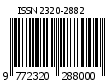
ISSN: 2320-2882 Impact Factor: 7.97 and ISSN APPROVED Journal Starting Year (ESTD) : 2013


ISSN and 7.97 Impact Factor Details
ISSN: 2320-2882 Impact Factor: 7.97 and ISSN APPROVED Journal Starting Year (ESTD) : 2013
DOI Details
CONFERENCE
CONFERENCE MANAGMENT & PUBLICATION CONFERENCE PROPOSAL
RECENT CONFERENCE

CONFERENCE PROPOSAL CONFERENCE PROCEEDINGS
CONFERENCE PROPOSAL CONFERENCE PROCEEDINGS
For Reviewer /Referral (RMS) Earn 500 per paper
Important Links
NEWS & Conference
Digital Library
IJCRT RMS | Earn 500 Per Paper.

Open Access


LICENSE
Indexing Partner
Scholarly open access journals, Peer-reviewed, and Refereed Journals, Impact factor 7.97 (Calculate by google scholar and Semantic Scholar | AI-Powered Research Tool) , Multidisciplinary, Monthly, Indexing in all major database & Metadata, Citation Generator, Digital Object Identifier(DOI)